
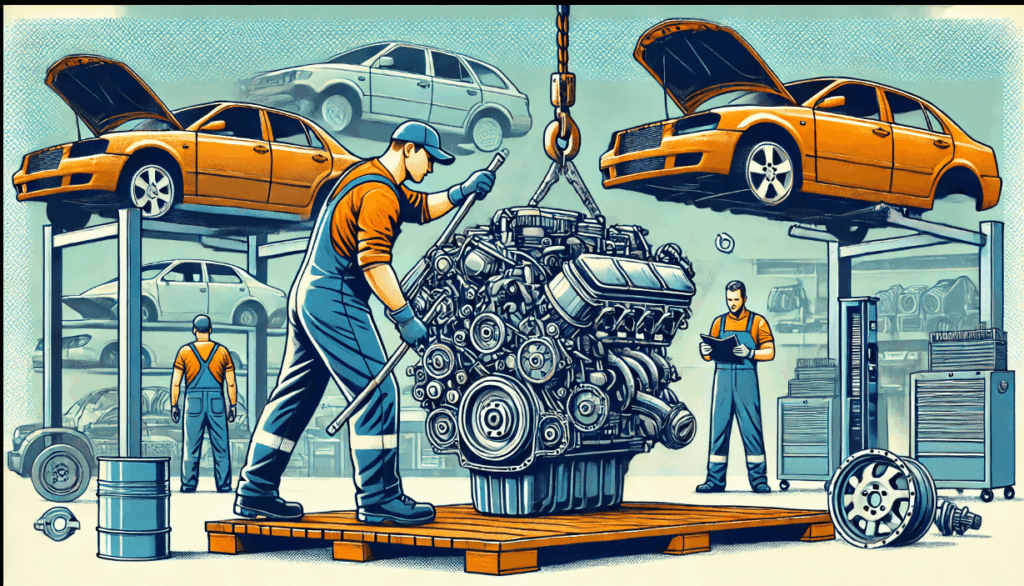
Looking to score high-quality used auto parts without breaking the bank? Salvage yards are gold mines for engines, transmissions, doors, and more—but safely removing and transporting these hefty parts takes some know-how. Follow this essential guide to make your salvage yard trip smooth, safe, and hassle-free.
1. Plan Ahead: Know What You Need
Before you step into the yard, do your homework.
- Check online inventory (if available) to ensure the part is in stock.
- Research how the part is attached—are there hidden bolts or rusted connectors?
- List the tools you’ll need so you’re not stuck halfway through the job.
2. Bring the Right Tools
You don’t need a full mechanic’s shop, but the right gear makes all the difference:
- Socket set & breaker bar – Essential for tough bolts.
- Pry bar – Helps dislodge stuck components.
- WD-40 or penetrating oil – Loosen rusted parts with ease.
- Jack & jack stands – For safely lifting vehicles.
- Work gloves & safety goggles – Protect your hands and eyes from debris.
- Dolly or cart – Haul heavy parts without breaking a sweat.
3. Dress for the Job
Salvage yards aren’t fashion shows—wear durable clothing to stay safe:
- Gloves – Avoid cuts and scrapes.
- Safety goggles – Shield your eyes from flying debris.
- Steel-toed boots – Protect against falling parts.
- Long sleeves & rugged pants – Minimize injuries.
4. Lift Smart, Not Hard
Improper lifting = back pain for days! Follow these lifting rules:
- Bend your knees, not your back.
- Keep the load close to your body.
- Use a cart or dolly for heavier parts like engines.
- Get help—some parts are just too heavy for one person!
5. Drain Fluids the Right Way
Many large parts (like engines & transmissions) hold fluids—oil, coolant, transmission fluid.
- Don’t spill—salvage yards often have fluid disposal stations.
- Lighter parts = easier transport. Drain before you carry!
6. Step-By-Step Removal
- Pro Tip: Don’t just yank—every part has a method for safe removal!
- Disconnect wires, hoses, and brackets first.
- Unscrew mounting bolts in the correct order.
- Use a breaker bar or pry bar for stubborn parts.
- Keep all bolts and small parts organized in a bag—losing them is a pain!
Sometimes a repair makes sense, and sometimes the cost of parts and labor is more than the vehicle is worth. For cars that are damaged, non-running, or ready to move on from, this Maiden and Charlotte-area junk car selling guide explains the next step.
7. Jacking Up the Vehicle? Do It Right!
If you need to get under the car, be extra careful:
- Use the jack on a level surface for stability.
- ALWAYS use jack stands—never rely only on a jack.
- Double-check that the car is stable before crawling under it.
8. Transporting Large Parts Without the Struggle
Got your part? Now, let’s get it to your vehicle without a workout:
- Use a dolly or cart to avoid carrying heavy loads.
- Get help from a buddy for oversized parts.
- If possible, disassemble the part for easier transport.
- Secure the part with straps to prevent shifting while driving.
9. Watch for Hidden Attachments
Some parts have sneaky hidden bolts or connectors. Before pulling:
- Double-check all bolts, wires, and hoses are detached.
- For doors, check for hidden bolts inside the panel.
- Rushing can damage the part—take a minute to ensure it's free.
10. Follow Salvage Yard Rules
Every yard has its own do’s and don’ts—make sure you’re in the clear:
- Some yards offer hoists or carts—ask before you struggle with heavy parts.
- Follow safety rules—gear requirements, restricted tools, etc.
- Be respectful—don’t leave tools or mess behind.
Your Trusted Source for Used Auto Parts & Salvage Services
At U Pull & Save, we make buying & selling used auto parts hassle-free. Whether you're a DIYer or a mechanic, you’ll find:
- A massive inventory of affordable, high-quality parts.
- A smooth, no-stress process for selling your old car.
- Helpful staff to guide you along the way.